(stark)
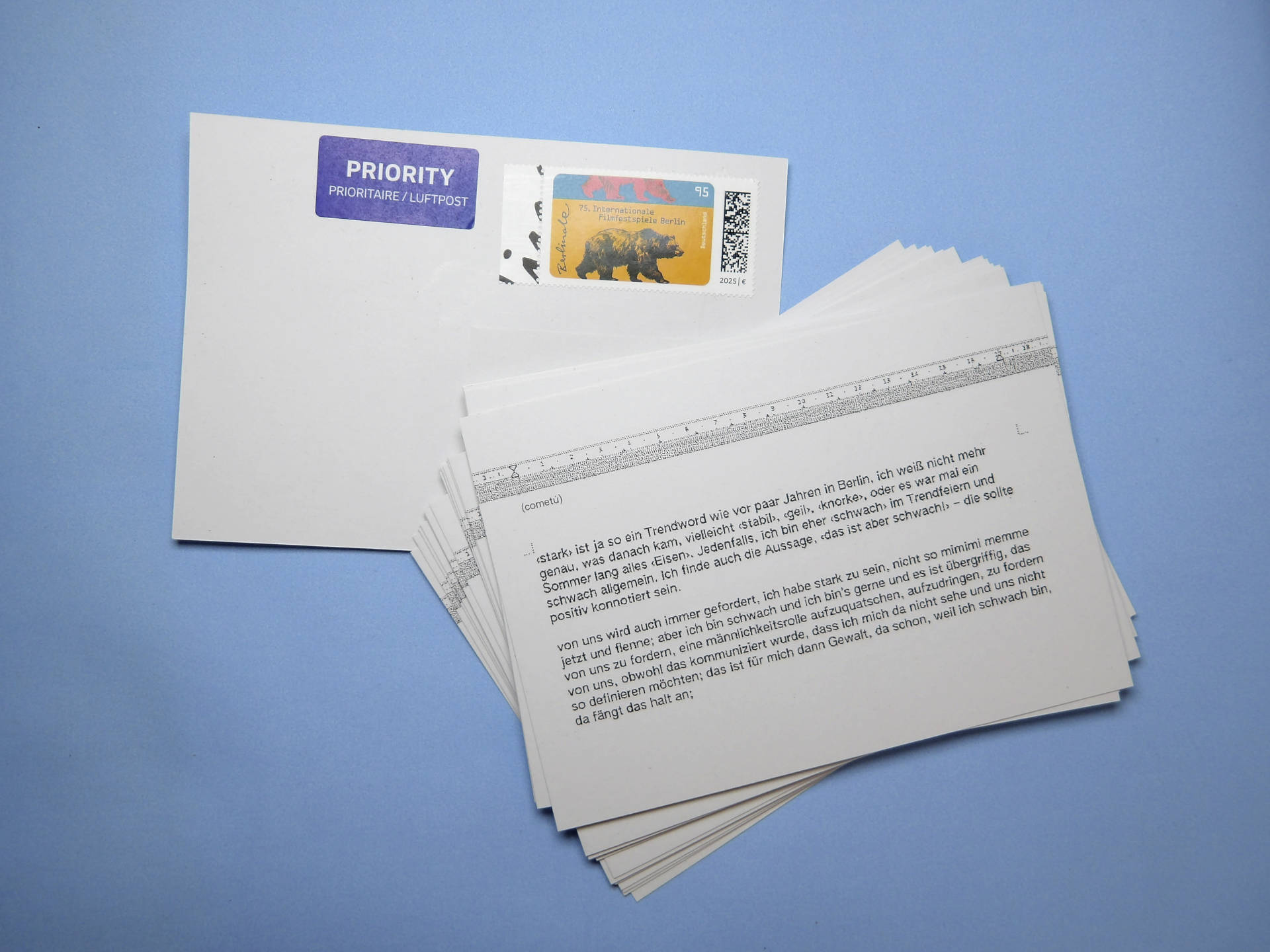
‹stark› ist ja so ein Trendword wie vor paar Jahren in Berlin, ich weiß nicht mehr genau, was danach kam, vielleicht ‹stabil›, ‹geil›, ‹knorke›, oder es war mal ein Sommer lang alles ‹Eisen›. Jedenfalls, wir sind eher ‹schwach› im Trendfeiern und schwach allgemein. Auch die Aussage, ‹das ist aber schwach!› – die sollte positiv konnotiert sein.
von uns wird auch immer gefordert, ich habe stark zu sein, nicht so mimimi memme jetzt und flenne; aber ich bin schwach und ich bin’s gerne und es ist übergriffig, das von uns zu fordern, eine männlichkeitsrolle aufzuquatschen, aufzudringen, zu fordern von uns, obwohl das kommuniziert wurde, dass ich mich da nicht sehe und uns nicht so definieren möchten; das ist für mich dann Gewalt, da schon, weil ich schwach bin, da fängt das halt an;
‹Strong› is kind of a buzzword, like it was a few years ago in Berlin. I don’t remember exactly what came after that—maybe ‹stabil›, ‹geil›, ‹knorke›, or maybe for one whole summer everything was ‹Eisen.› Anyway, I’m pretty ‹weak› when it comes to jumping on trends, and weak in general. I also think the phrase, ‹That’s so weak!›—it should have a positive connotation.
We’re always being told to be strong, not to be such a crybaby mimimi and whine; but I’m weak and I like being that way, and it’s intrusive to demand that of us, to push a masculine role on us, to impose it, to demand it of us, even though we’ve made it clear that I don’t see myself that way and we don’t want to define ourselves that way; to me, that’s violence, precisely because I’m weak—that’s where it starts;
***
[cometú, 2026]